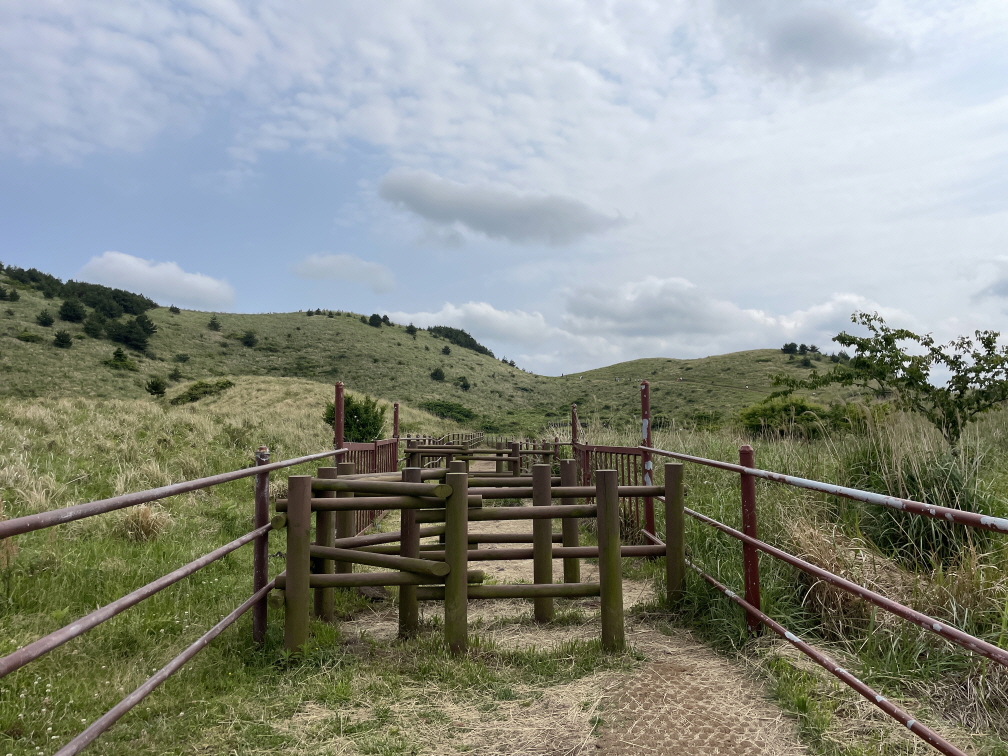
Yongnuni Oreum (용눈이오름)
- Location
- Jongdal-ri, Gujwa-eup, Jeju-si, Jeju
- Parking
- 1 lot
- Stops
- Parking & Restroom·Entrance & Amenities·Summit and more · 3
- Checked
- 5/2026
True to its name, the oreum has its eyes open.
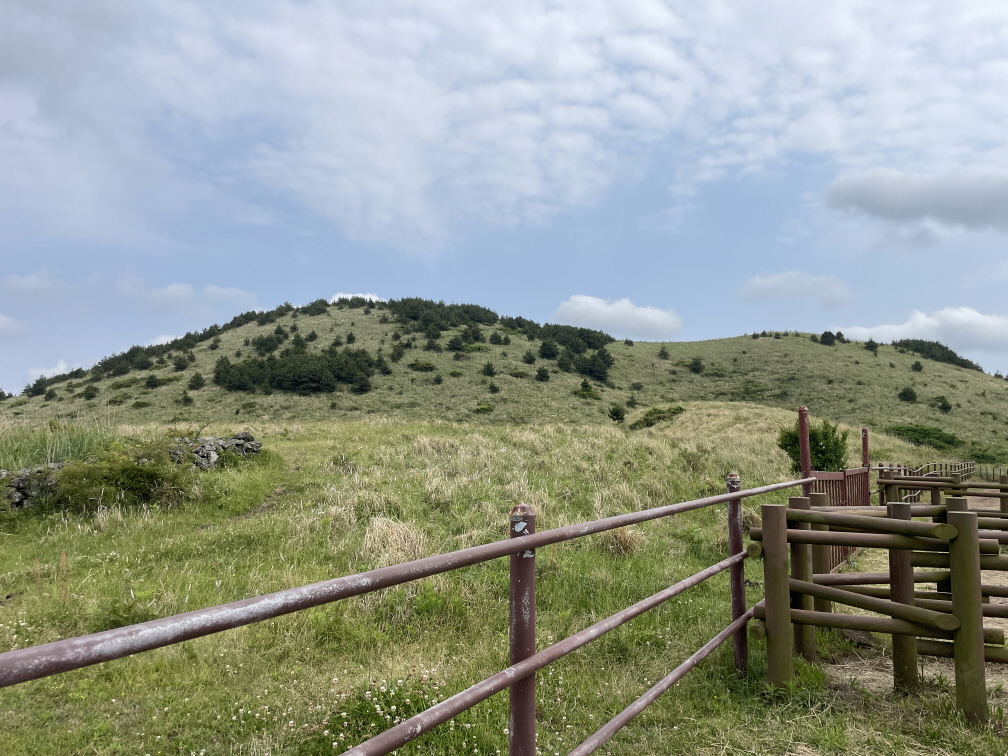
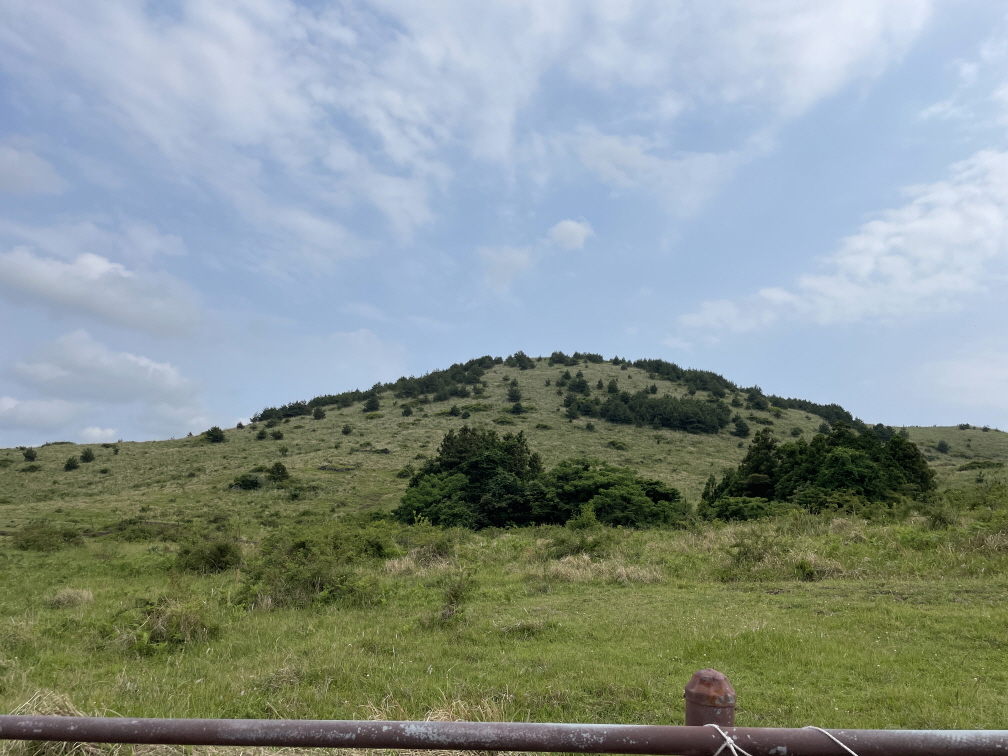
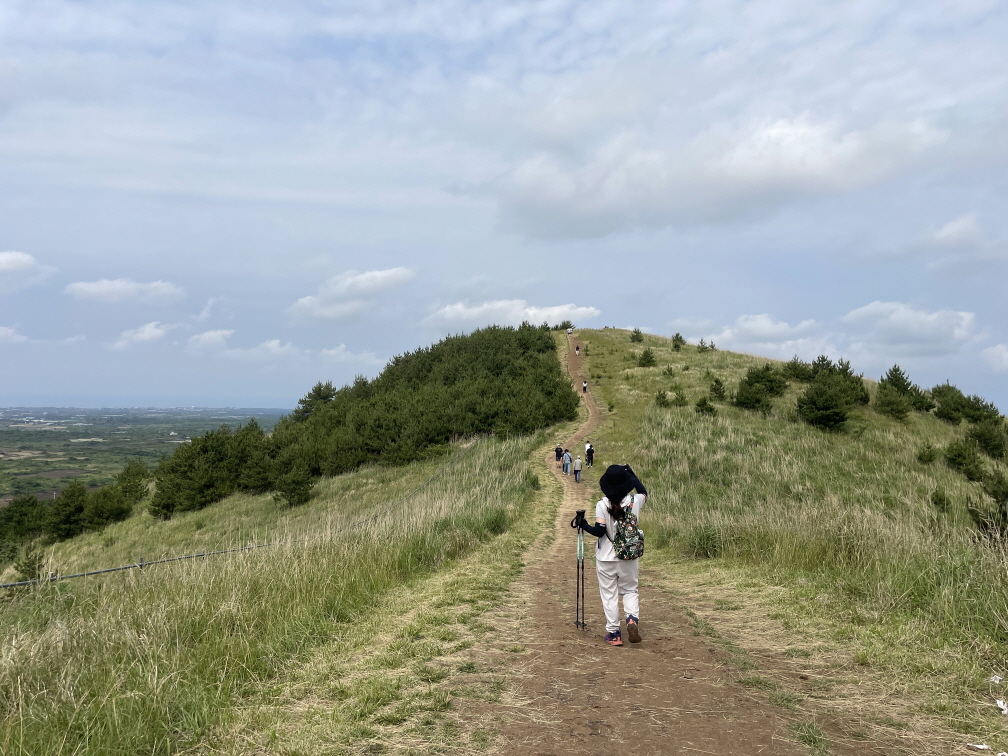
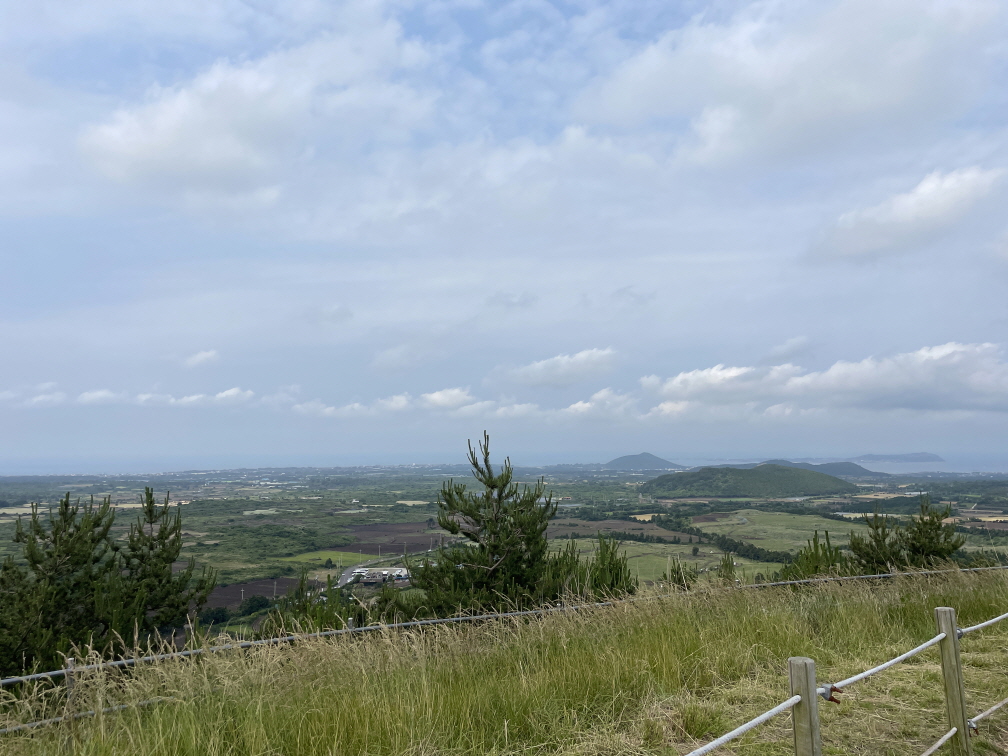
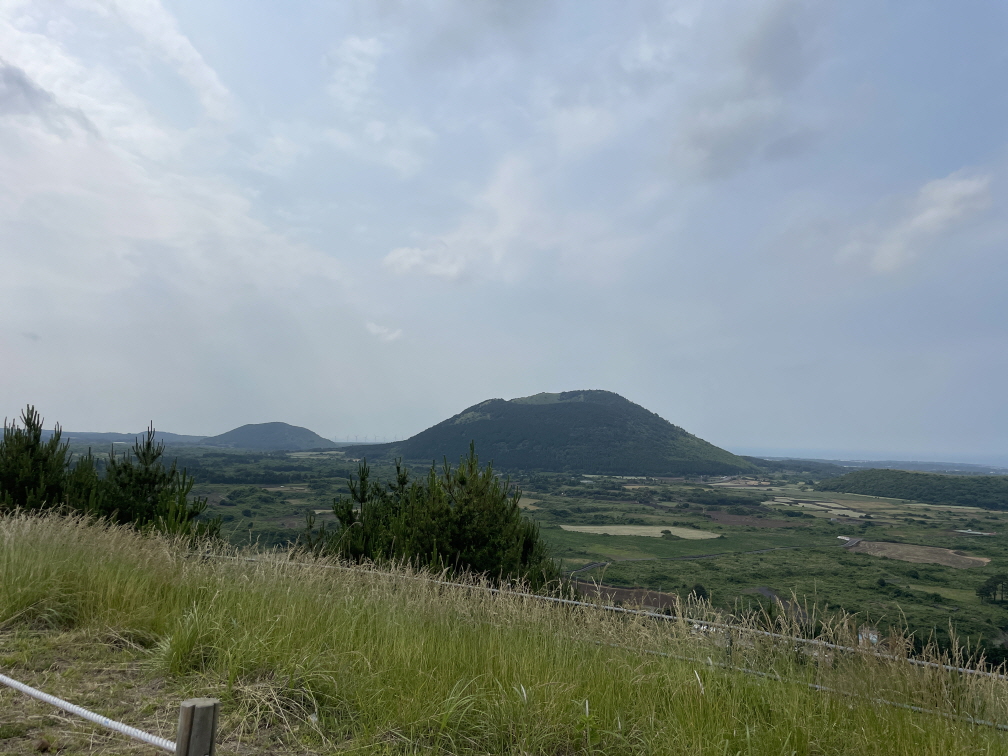
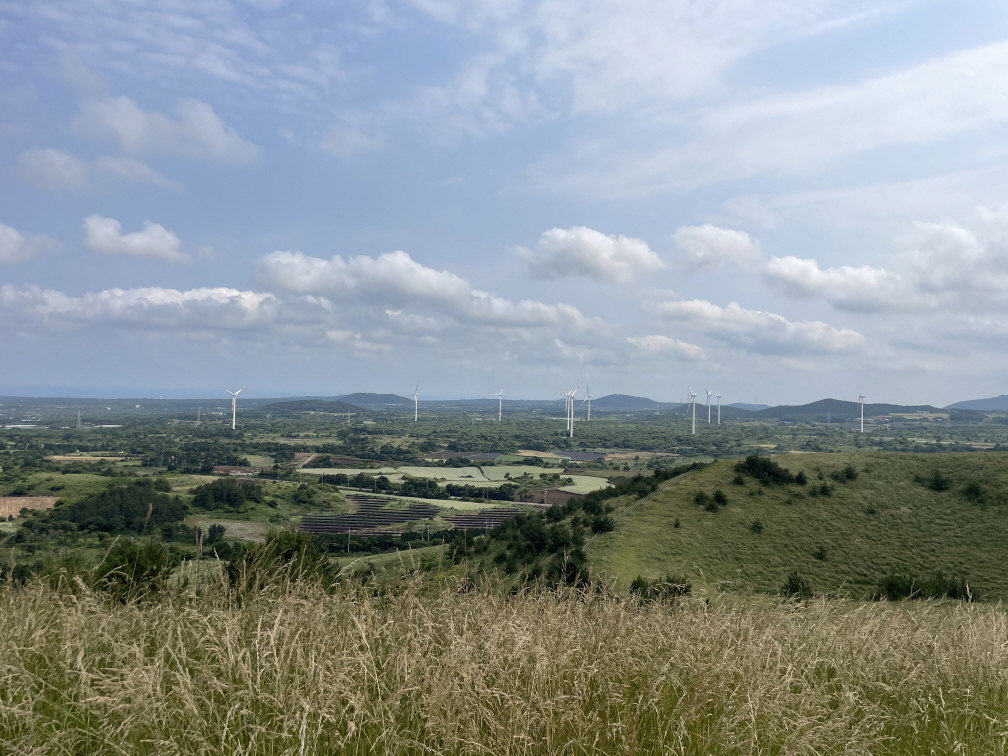
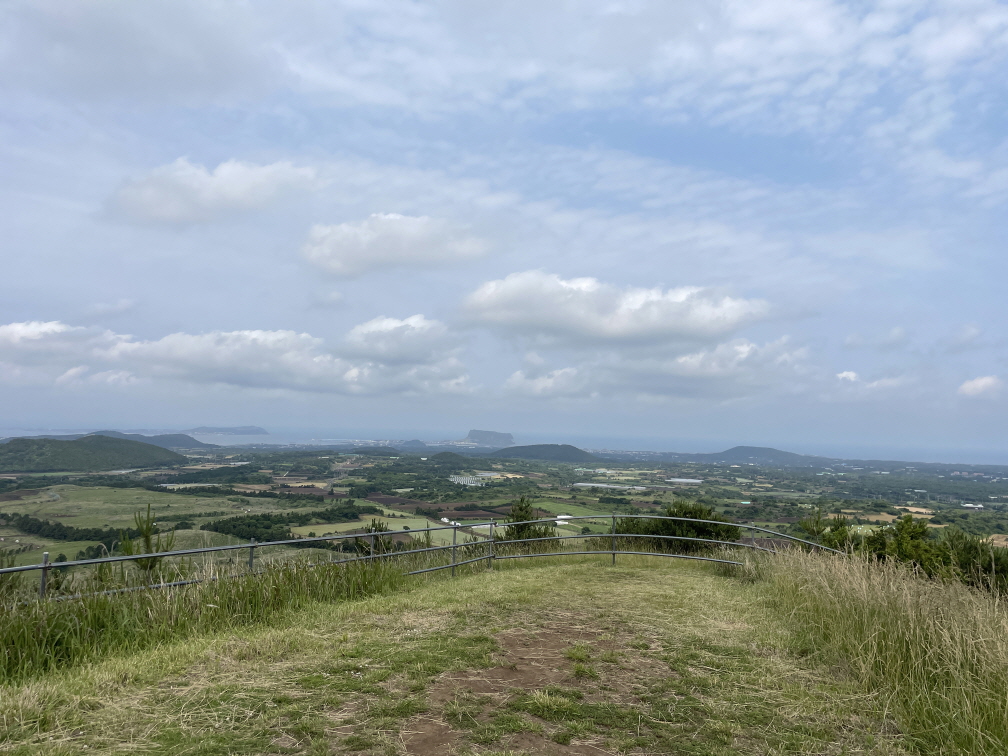
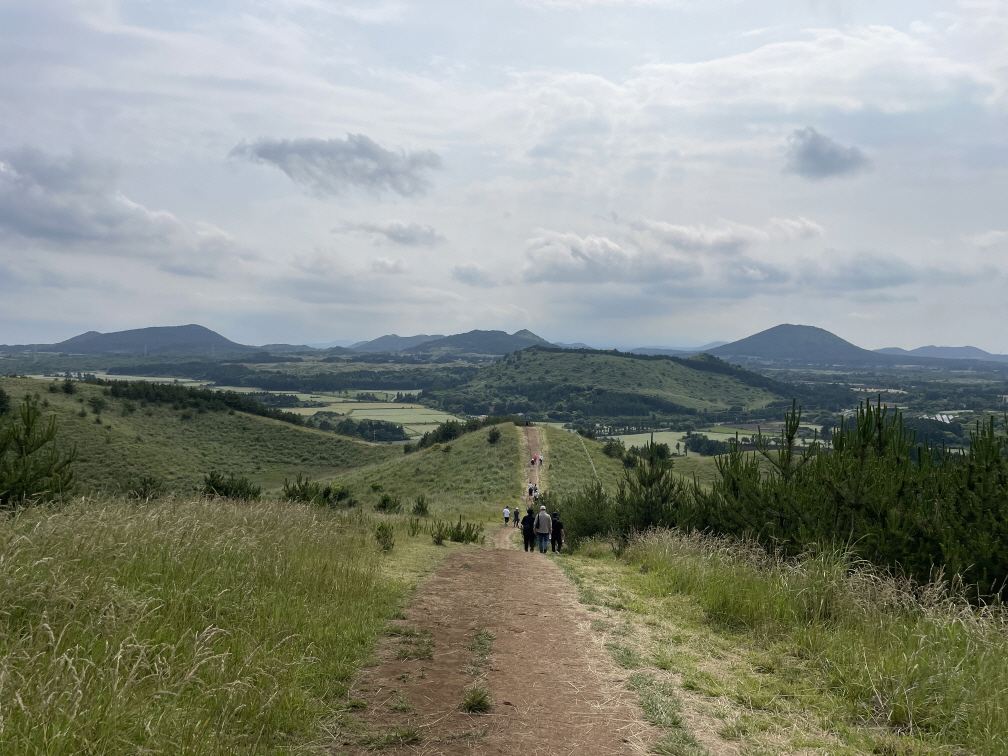
Three craters inside a single oreum is not something an explanation can make you feel. Walk the ridge and the meaning slowly reveals itself. Below the softly curving ridgeline, three gumburi — craters hollowed out like a dragon's eyes — appear one after another.
On a day with good light, the ridge shines as though it were alive.
When the morning sun settles at a slant across the ridge of the oreum, the rolling grassland takes on depth and form. This is why photographers come to this oreum before dawn. It is a slow oreum, where walking alone is enough.
Explore
Parking & Restroom
There is a large parking lot. The restrooms are fairly clean.
Best time to visit
- SpringApril–May
This is when the grassland turns pale green. The curves of the ridge show most clearly, and together with the canola flowers nearby you can enjoy the spring scenery of eastern Jeju.
- SummerJune–August
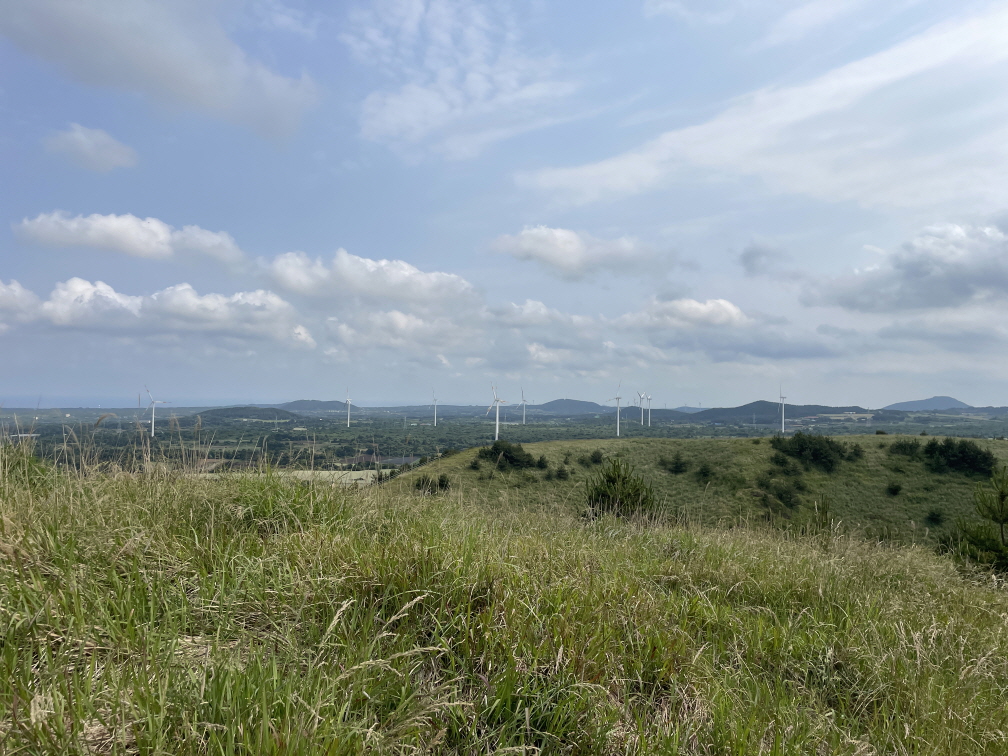
This is when the deep green ridge stands in contrast against the sky. The gentle slope makes for an easy climb, but there is no shade and the sun is strong.
- AutumnOctober–NovemberNow
This is when golden silver grass and blue sky come together. Shoot backlit in the early morning and the ridge of the oreum glows gold.
- WinterDecember–February
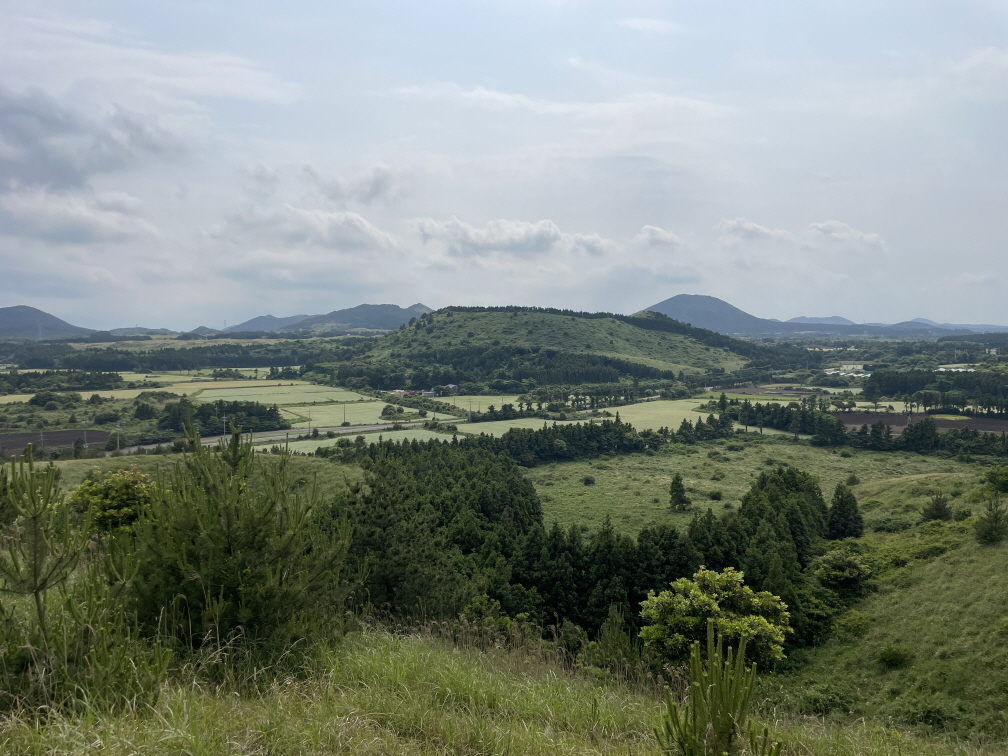
Under snow, the curves of the three craters grow even sharper. On a day when the snowscape of Hallasan Mountain can be seen above the ridge of the oreum, it is worth a trip made on purpose.
Good to know before you go
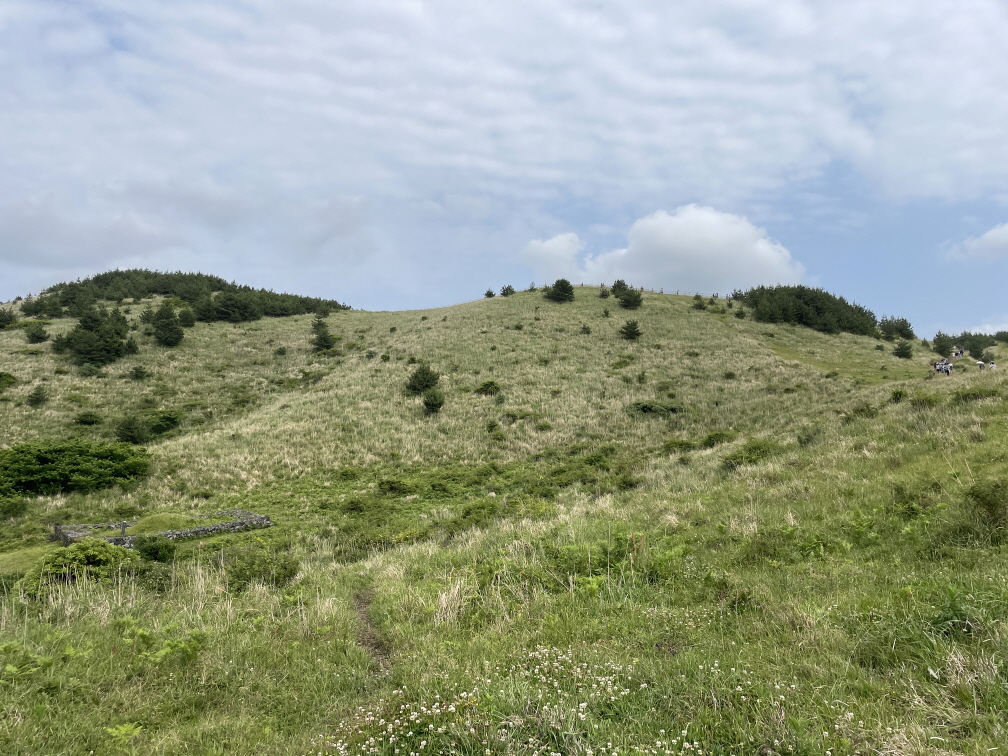
The slope is gentle, so you can be at the summit in 20–30 minutes. It is relatively easy among Jeju's oreum.
The path up the ridge is more beautiful than the summit itself. Do not hurry — walk slowly and enjoy the scenery around you.
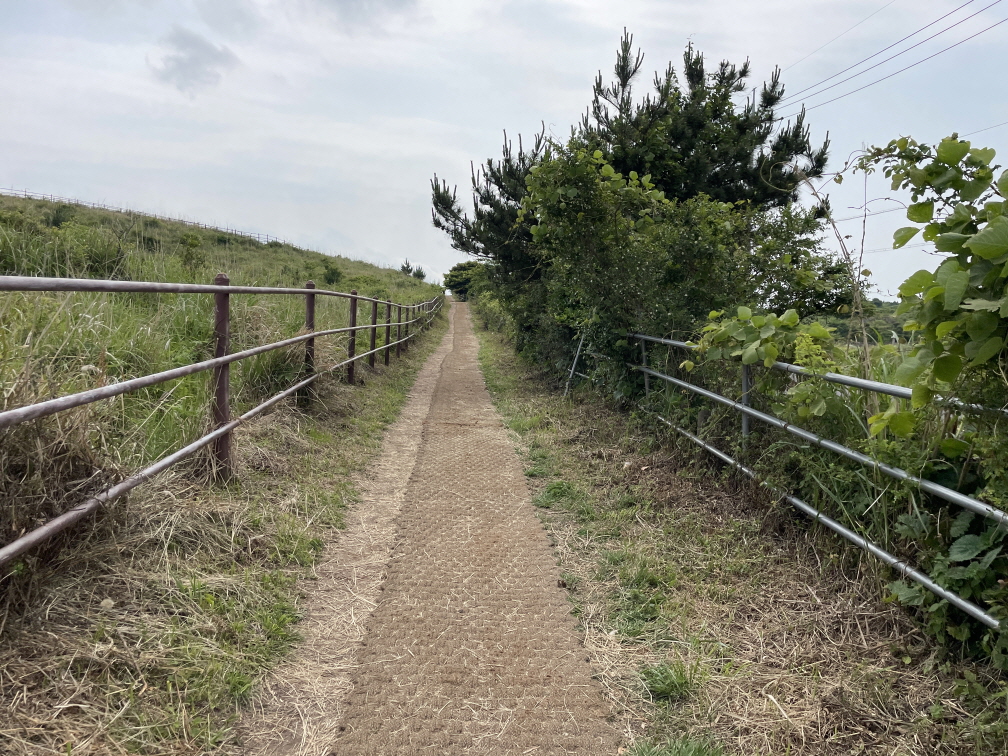
There is a large parking lot, and the restrooms are fairly clean. A dust blower is available at the entrance.
There is no shade on the ridge and the sun is strong. Sunscreen and a hat are essential.
It is famous as a photography spot. The ridge is at its most beautiful backlit in the early morning, and there are fewer people then.