Wollyeong Cactus Habitat (월령선인장군락지)
- Location
- Wollyeong-ri, Hallim-eup, Jeju-si, Jeju
- Parking
- 2 lots
- Stops
- Parking·Parking & Restroom·Entrance 1 and more · 5
- Checked
- 6/2026
Cacti by the Jeju sea — at first it feels strange.
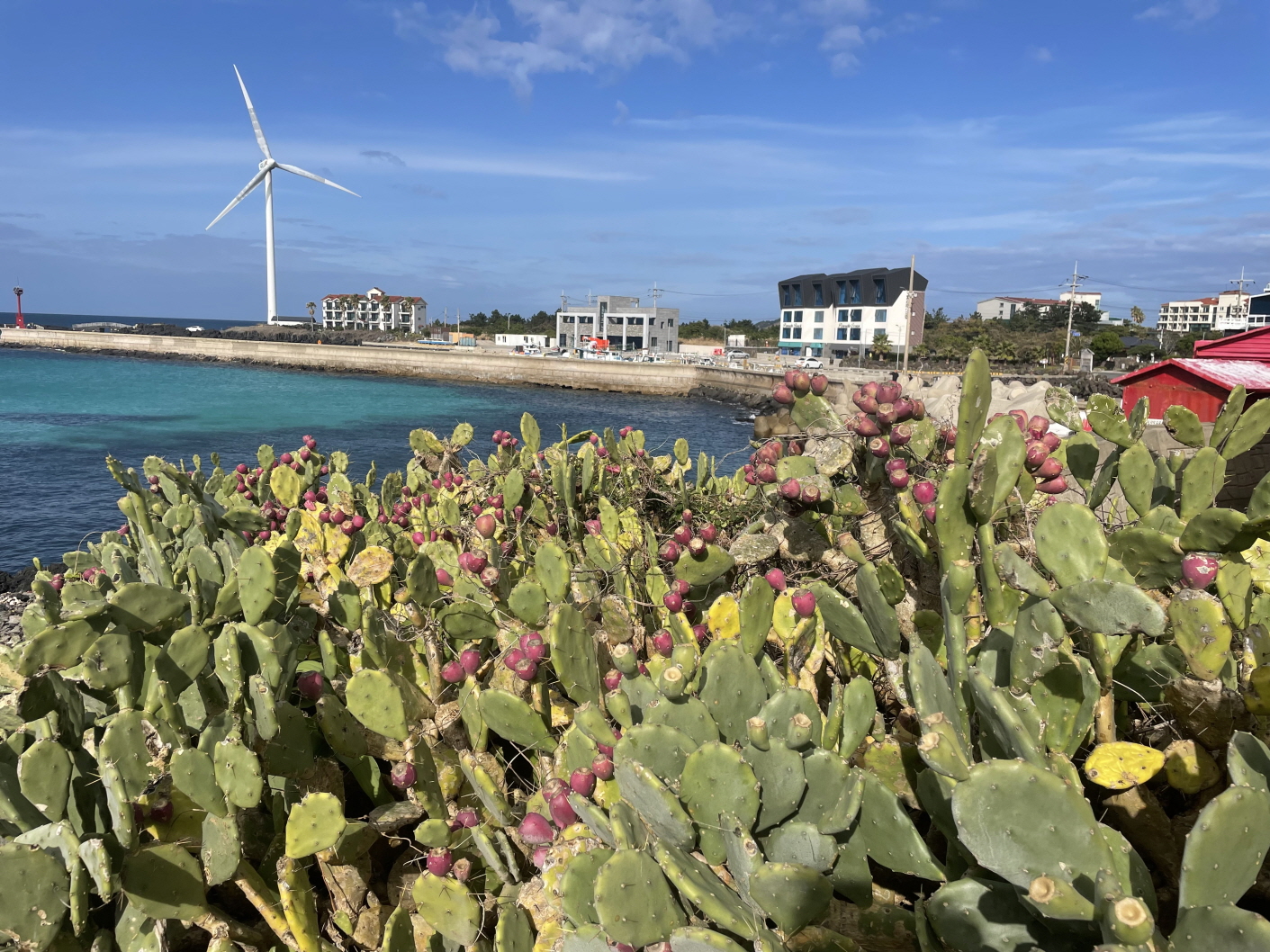
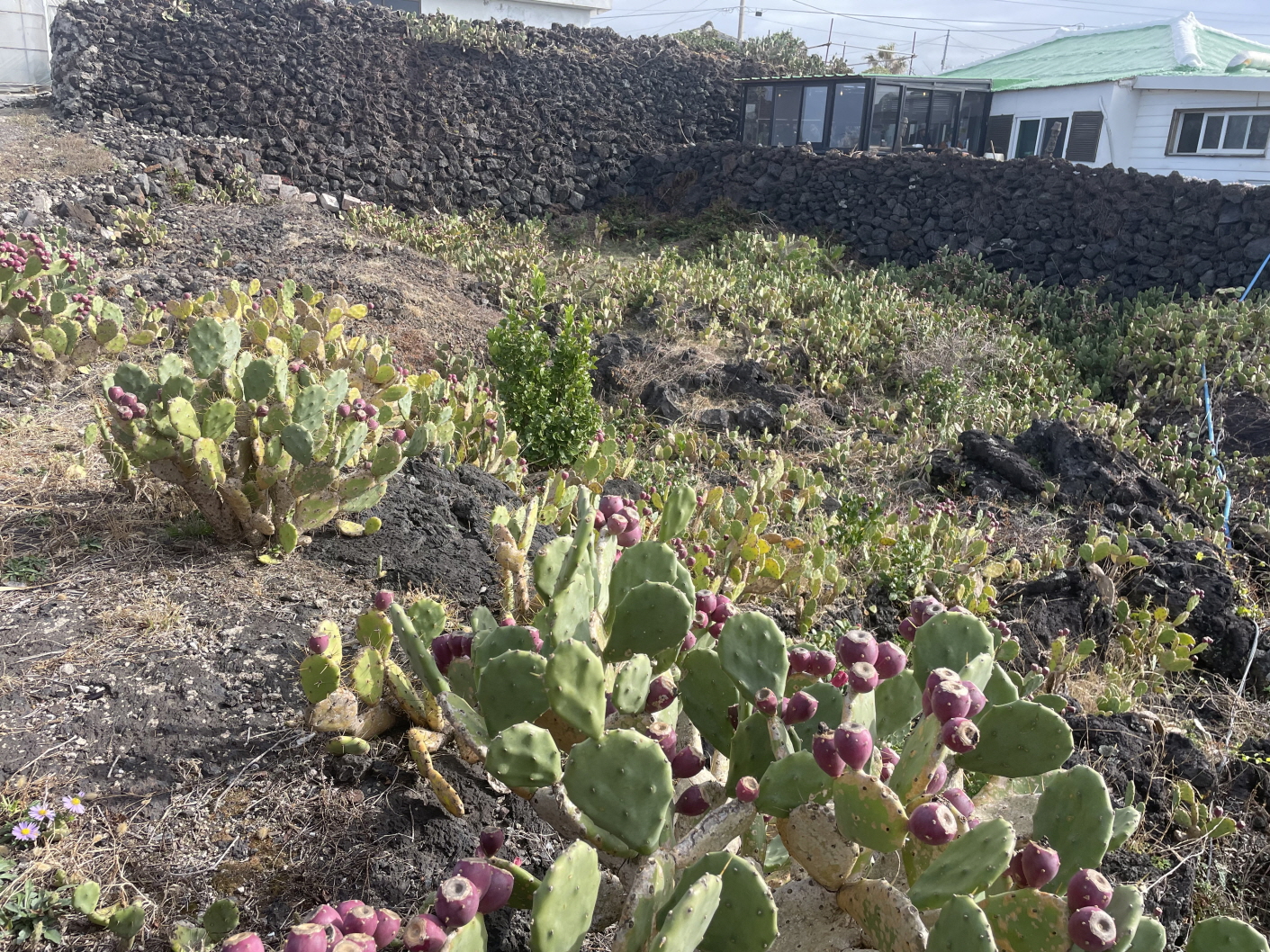
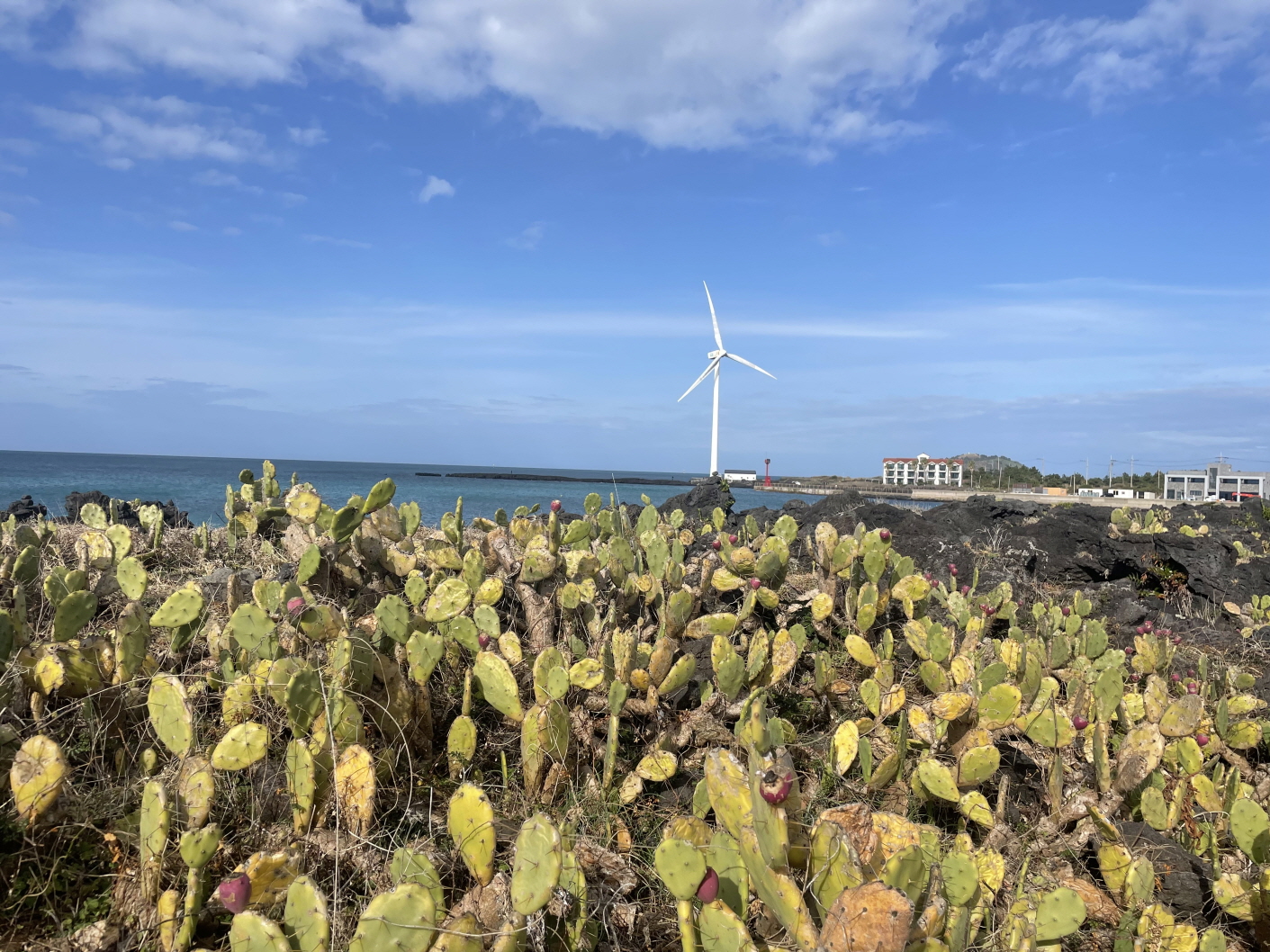
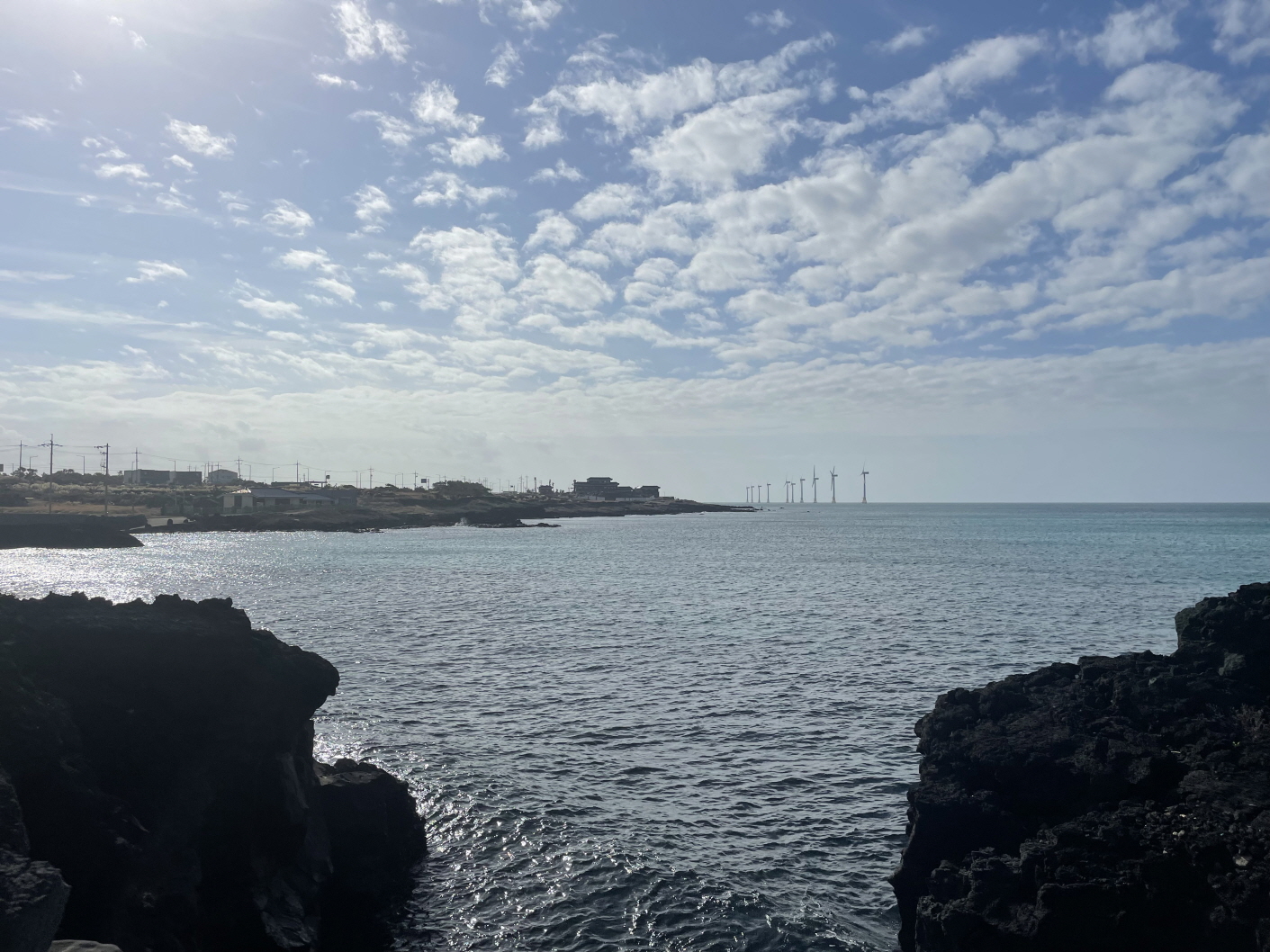
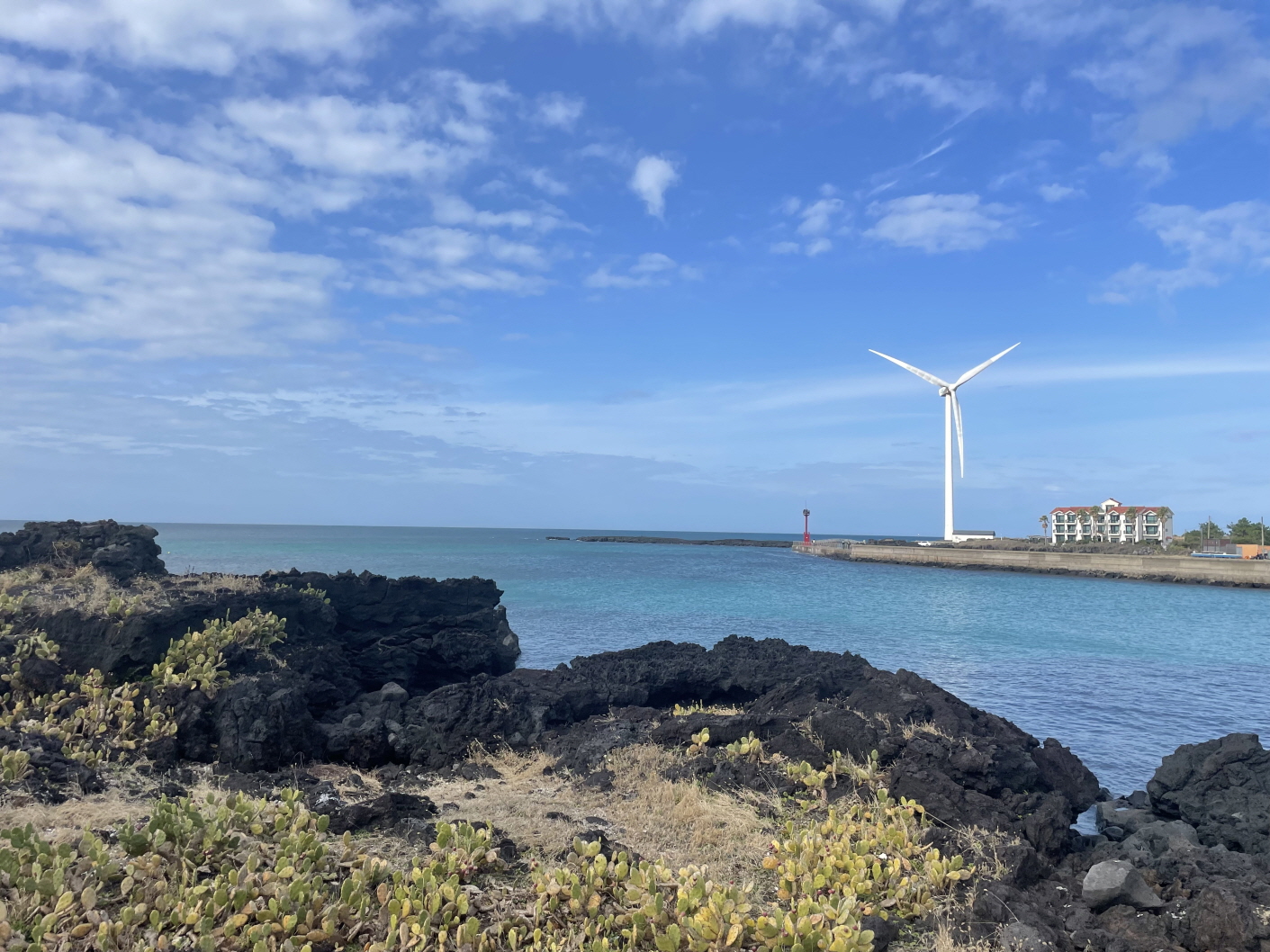
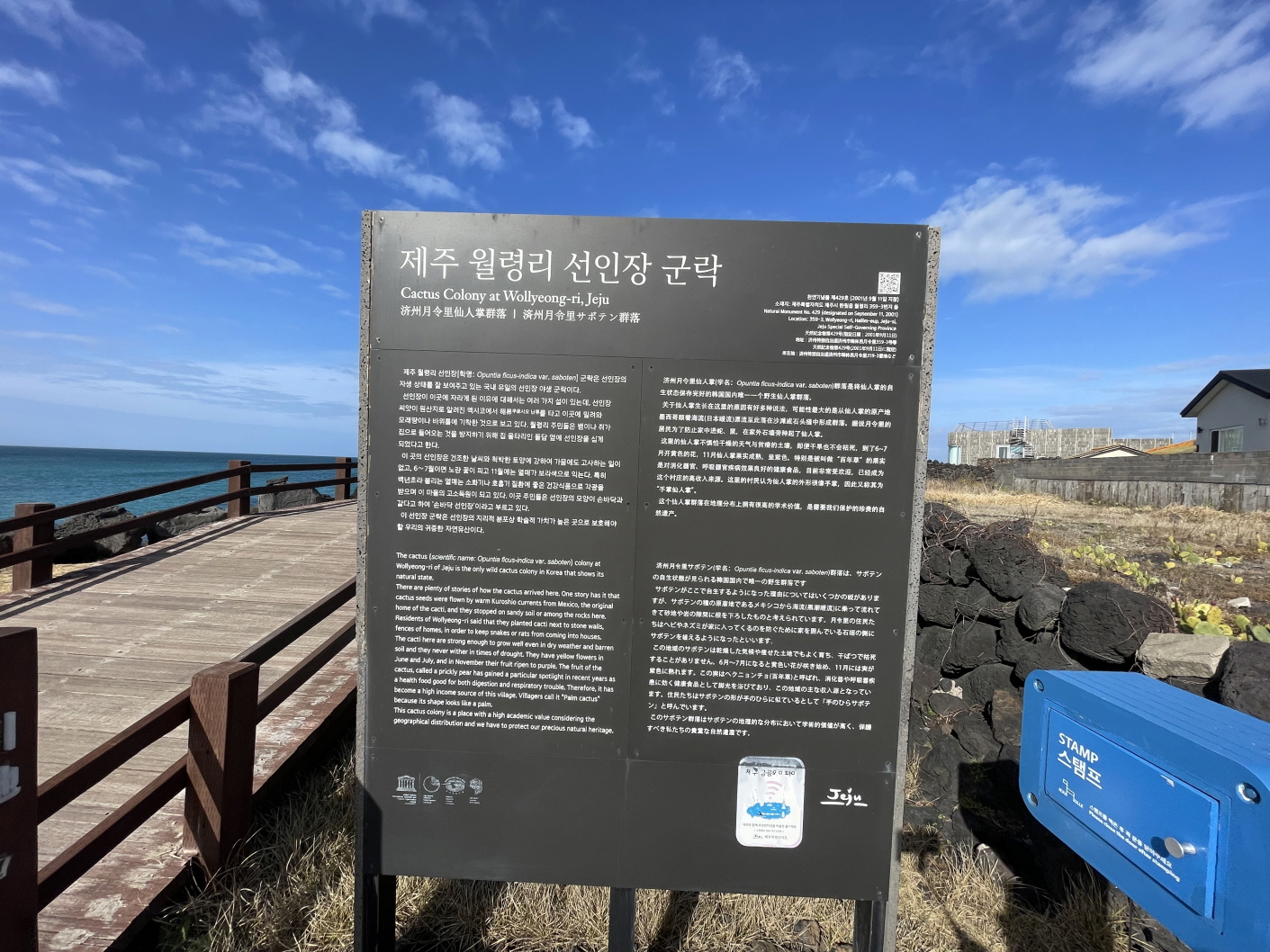
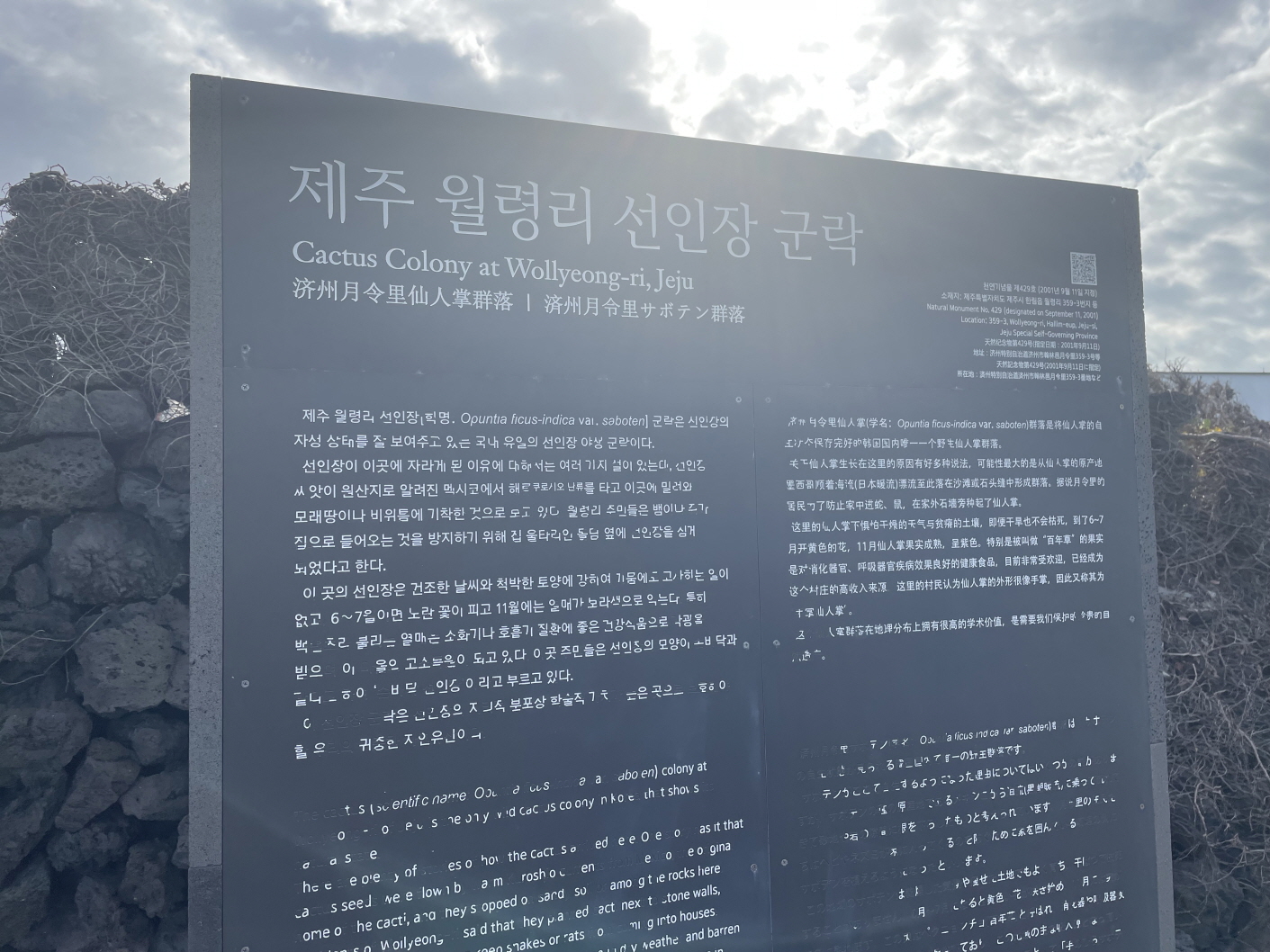
Wollyeong-ri is the only place in Korea where cacti grow wild. They say baengnyeoncho seeds set out from the coast of Mexico, rode the Kuroshio Current ten thousand kilometers, and settled into the cracks of this black basalt. Designated a natural monument in 2001, it is an exotic and singular landscape.
This is the moment to walk the boardwalk.
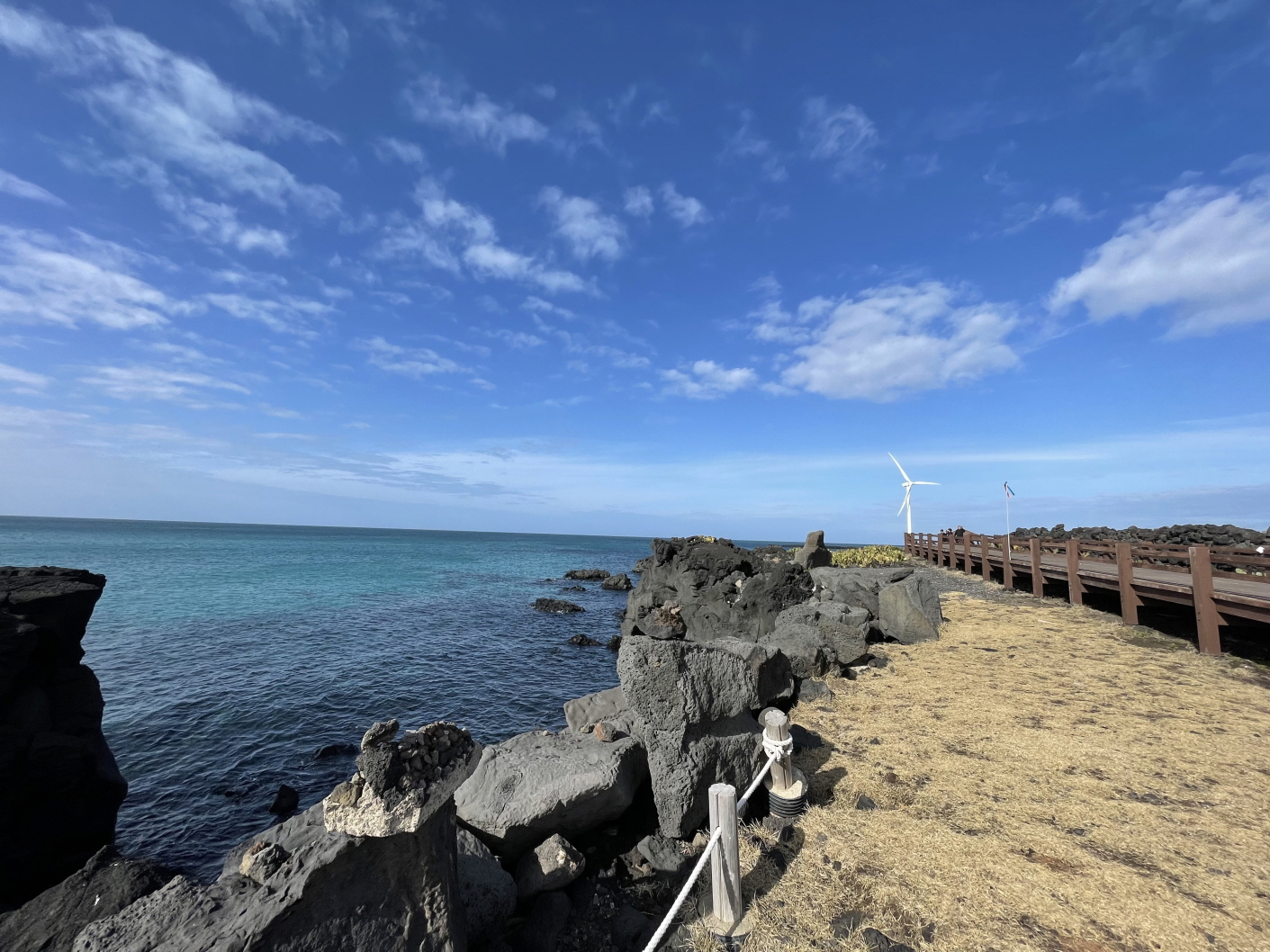
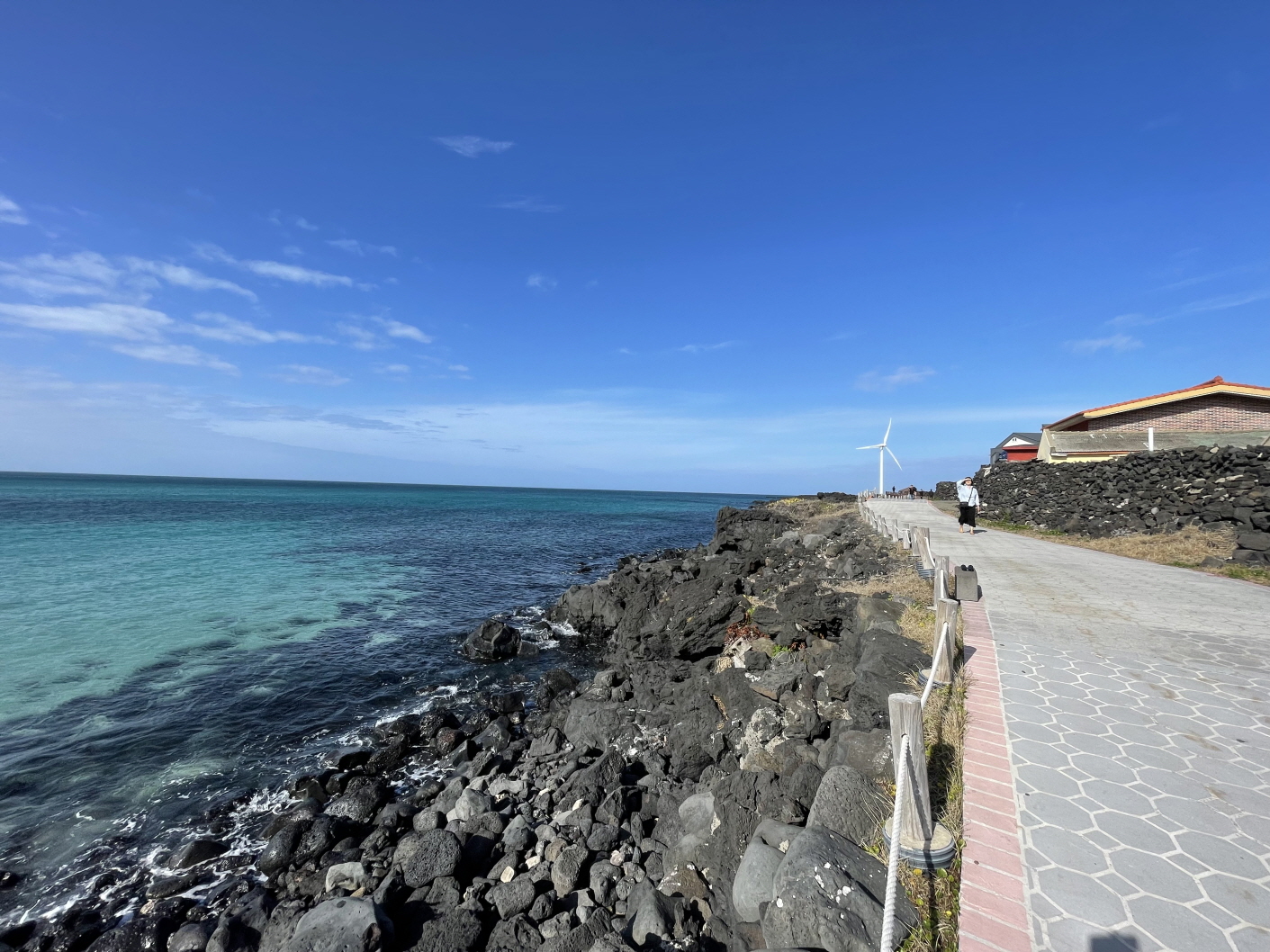
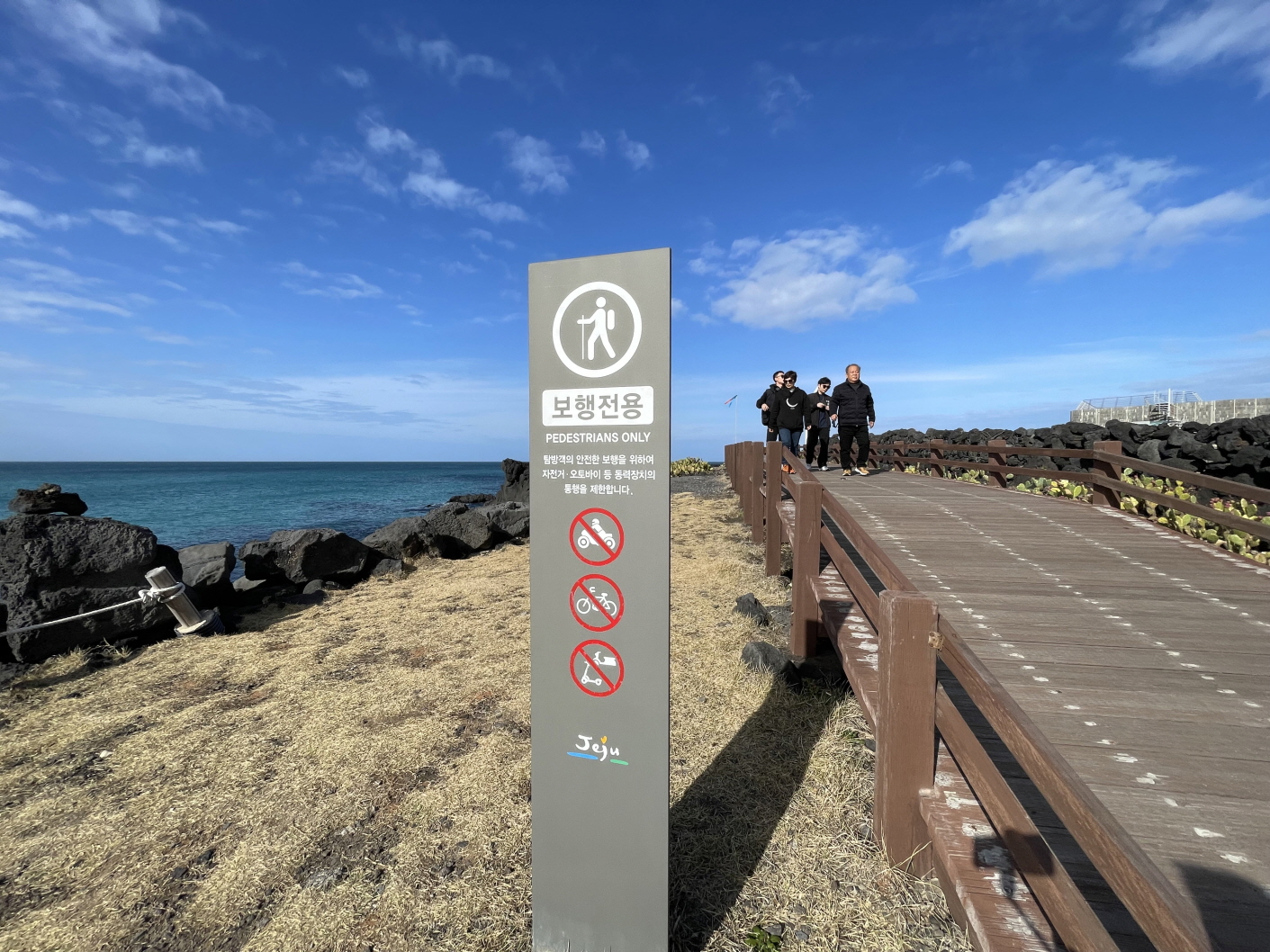
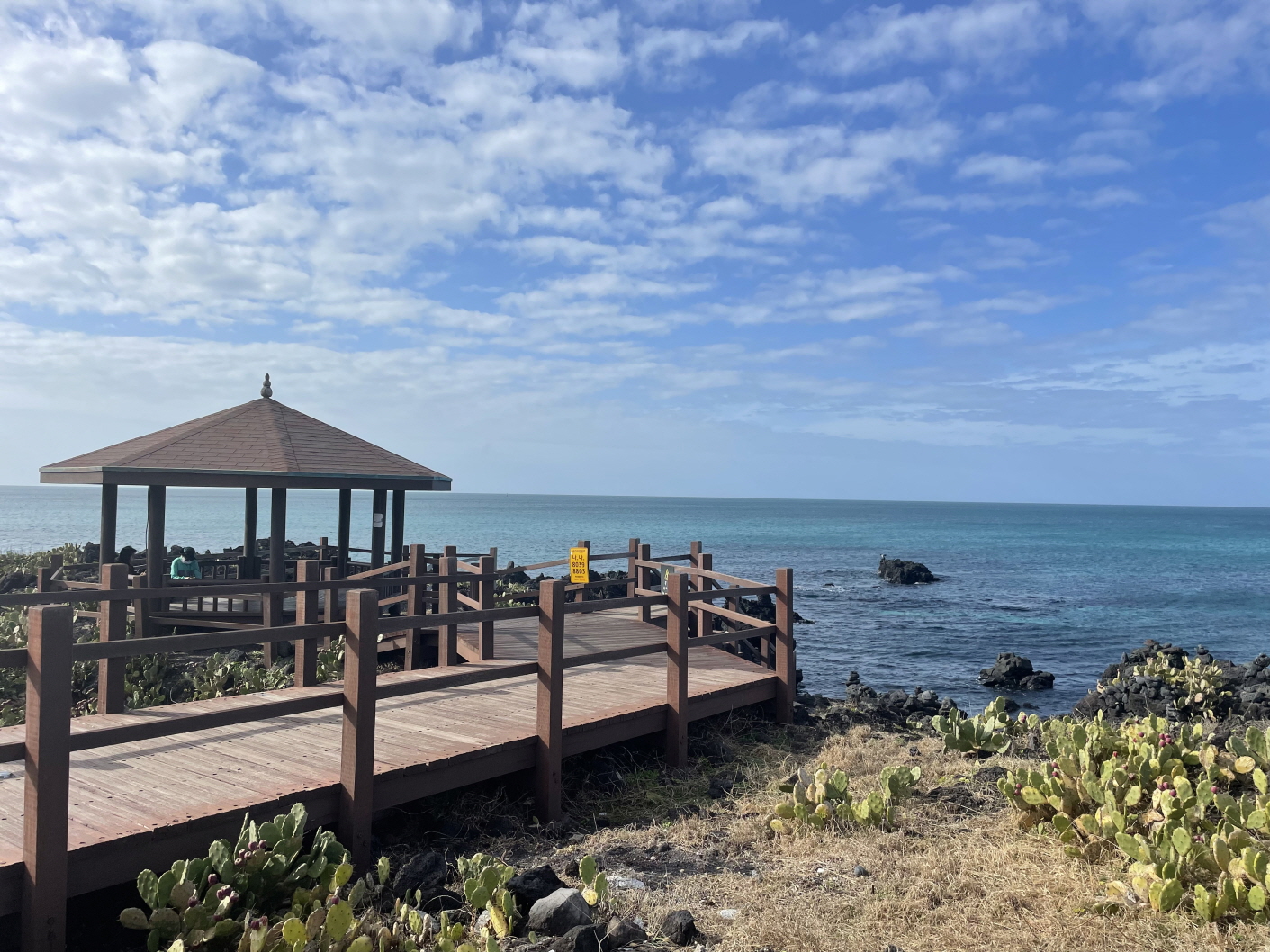
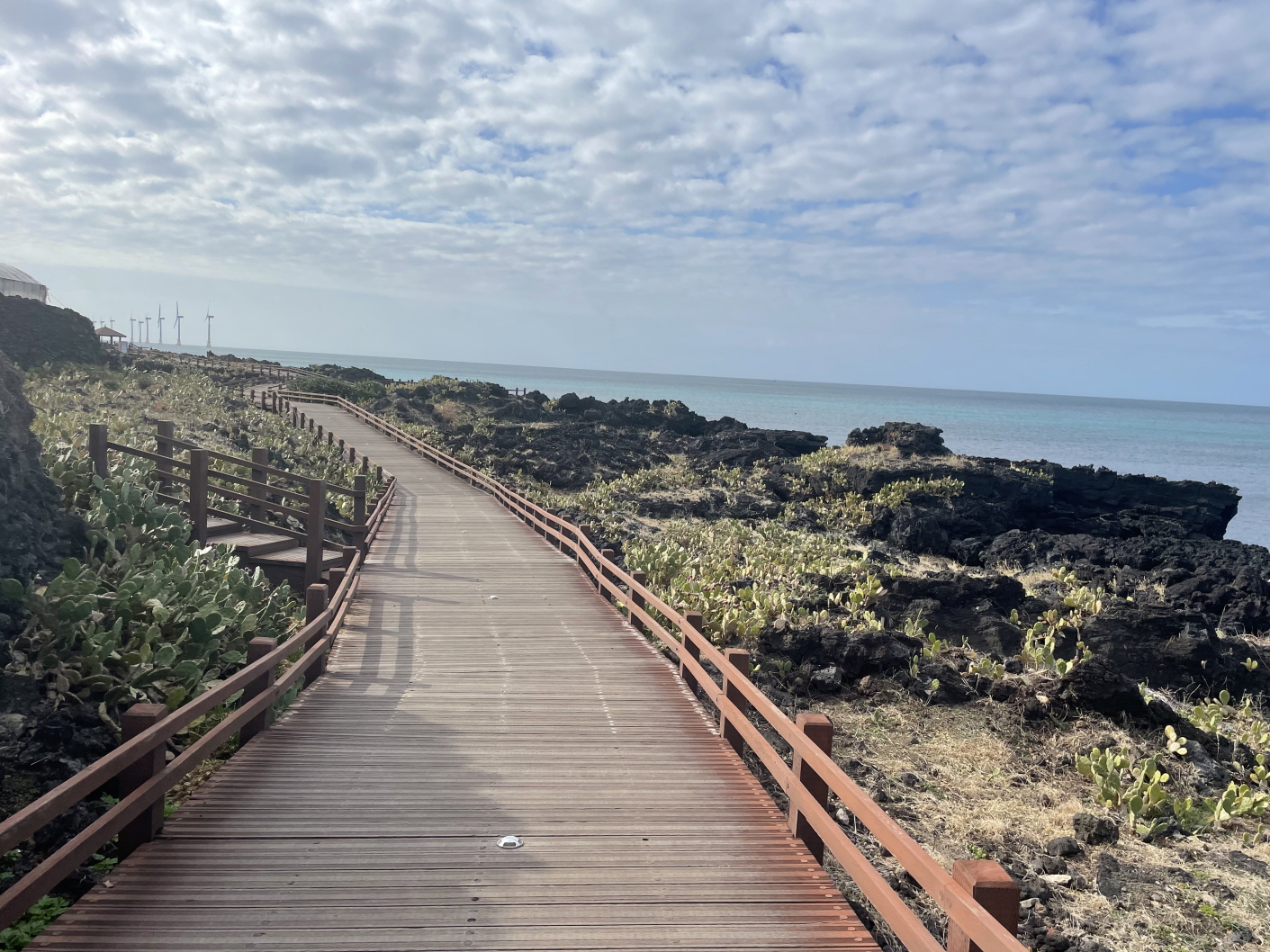
Walk the 214-meter wooden deck laid over the basalt and cacti crowd one side while an emerald sea opens on the other. The path is level enough for wheelchairs and strollers, so anyone can reach it with ease. In summer yellow cactus flowers, in autumn the purple fruit of the baengnyeoncho, stud the black rock in points.
Explore
Parking
There are two lots: one on the port side and one across from it.
Best time to visit
- SpringMarch–May
Cool weather for looking over the cactus colonies and the sea. The small sandy beach at the end of the boardwalk is quiet too.
- SummerJune–August
This is when the yellow cactus flowers open. The green cacti and the emerald sea are at their most vivid.
- AutumnSeptember–NovemberNow
Purple baengnyeoncho fruit ripens on the black rock. The exotic contrast of colors is at its peak.
- WinterDecember–February
A good time to walk the boardwalk with few people around. The wind is cold, so dress warmly.
Good to know before you go
The whole route is decked boardwalk on flat ground, so wheelchairs and strollers can get through. The elderly or those with limited mobility can look around easily too.
There are two parking lots, one by the port and one across from it. There are restrooms at the lot, but they are not especially tidy.
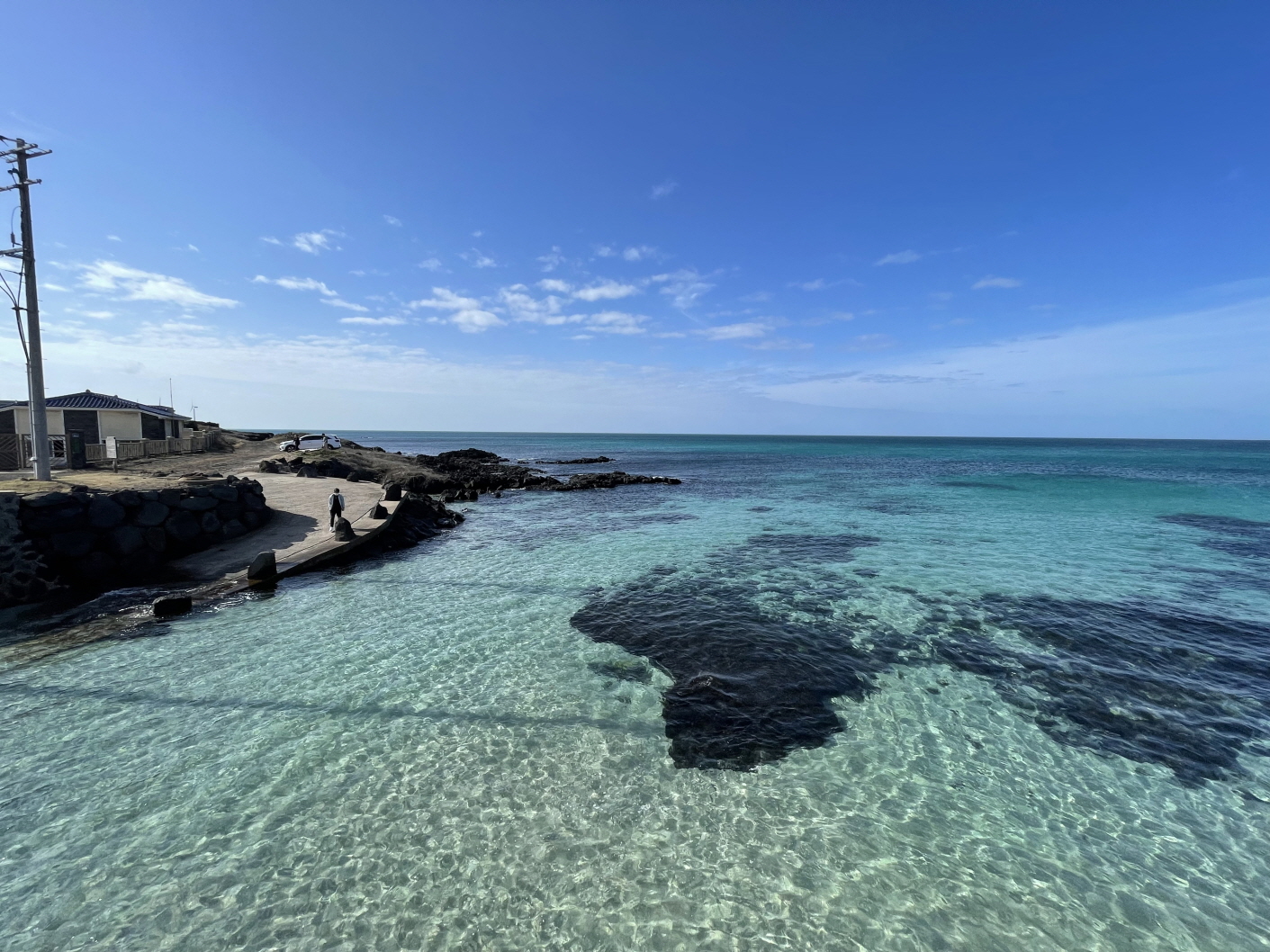
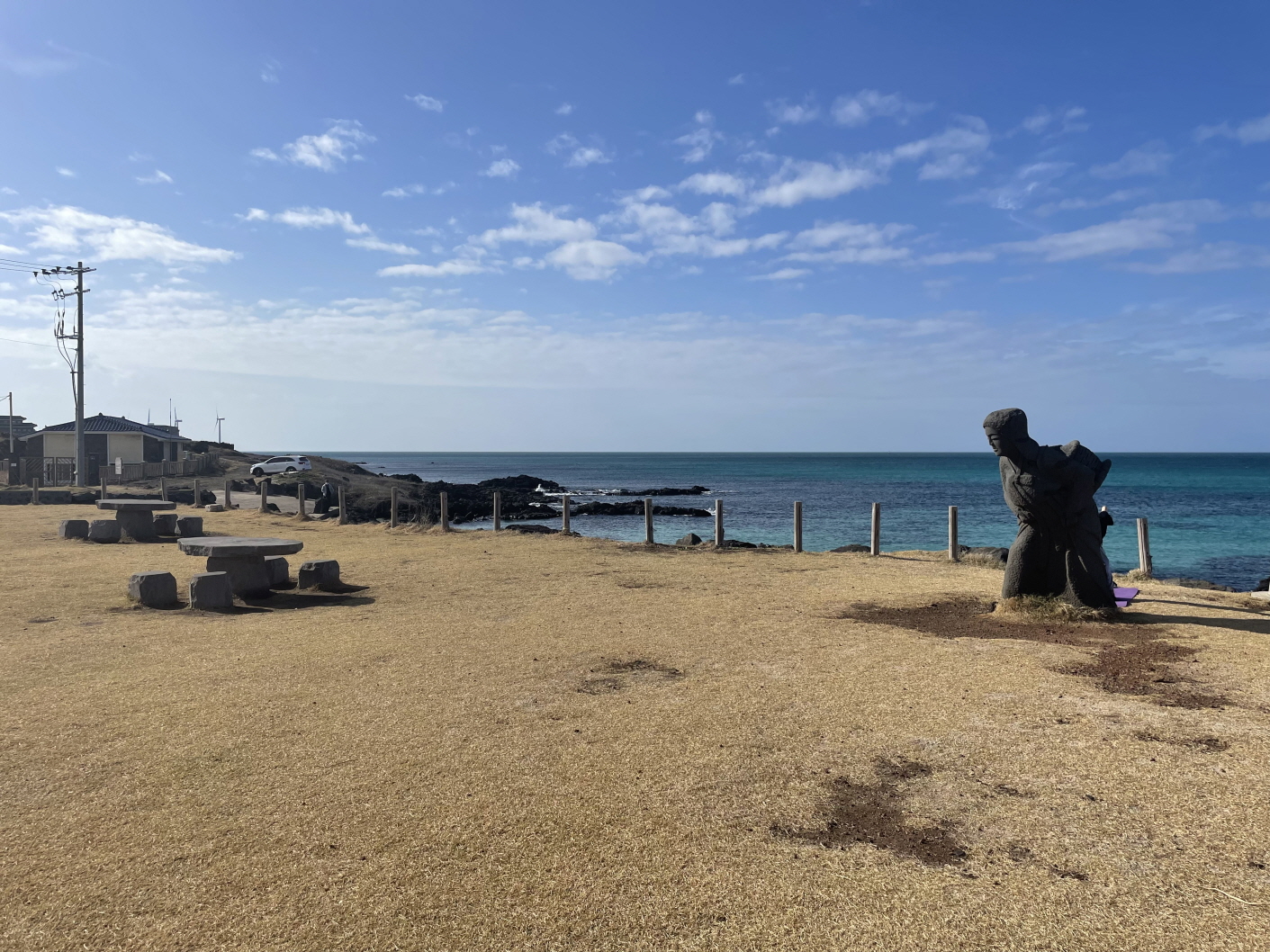
There is a small sandy beach at the end of the walking path.
As Korea's only wild cactus habitat, it was designated natural monument No. 429 in 2001.
In summer you can see yellow cactus flowers, and in autumn the purple fruit of the baengnyeoncho.
Directions to parking
Parking
There are two lots: one on the port side and one across from it.
Parking & Restroom
The parking lot has restrooms as well. They are not very clean.